Peak Shaving: what it is and how it reduces peaks in electricity demand
Peak Shaving is an energy management strategy that involves reducing peaks in electricity demand at a facility through the use of energy storage systems, distributed generation or smart consumption control mechanisms. Its main objective is to reduce the maximum power drawn from the electricity grid during specific periods, thereby optimising both energy costs and system efficiency.
In the renewable energy and energy storage sector, peak shaving has become one of the most important applications of BESS (Battery Energy Storage System) systems. During periods of peak electricity consumption, the batteries supply part of the energy required to power the facility, thereby preventing the entire demand from being met directly from the grid. As a result, the peak power recorded is reduced, as are the costs associated with capacity contracts and demand charges.
The growing electrification of industry, the rise in photovoltaic self-consumption and the expansion of storage systems have driven the development of peak shaving as an essential tool for improving energy flexibility. This strategy is currently being applied in industrial plants, commercial buildings, logistics centres, hospitals, data centres, critical infrastructure and large renewable energy facilities seeking to optimise their electricity consumption and reduce their energy bills.
Although the concept may seem straightforward, peak shaving requires precise control over the behaviour of the installation. Energy management systems continuously analyse demand, battery charge levels, renewable energy generation and grid conditions to determine the optimal time at which the storage system should begin discharging.
How does peak shaving work?
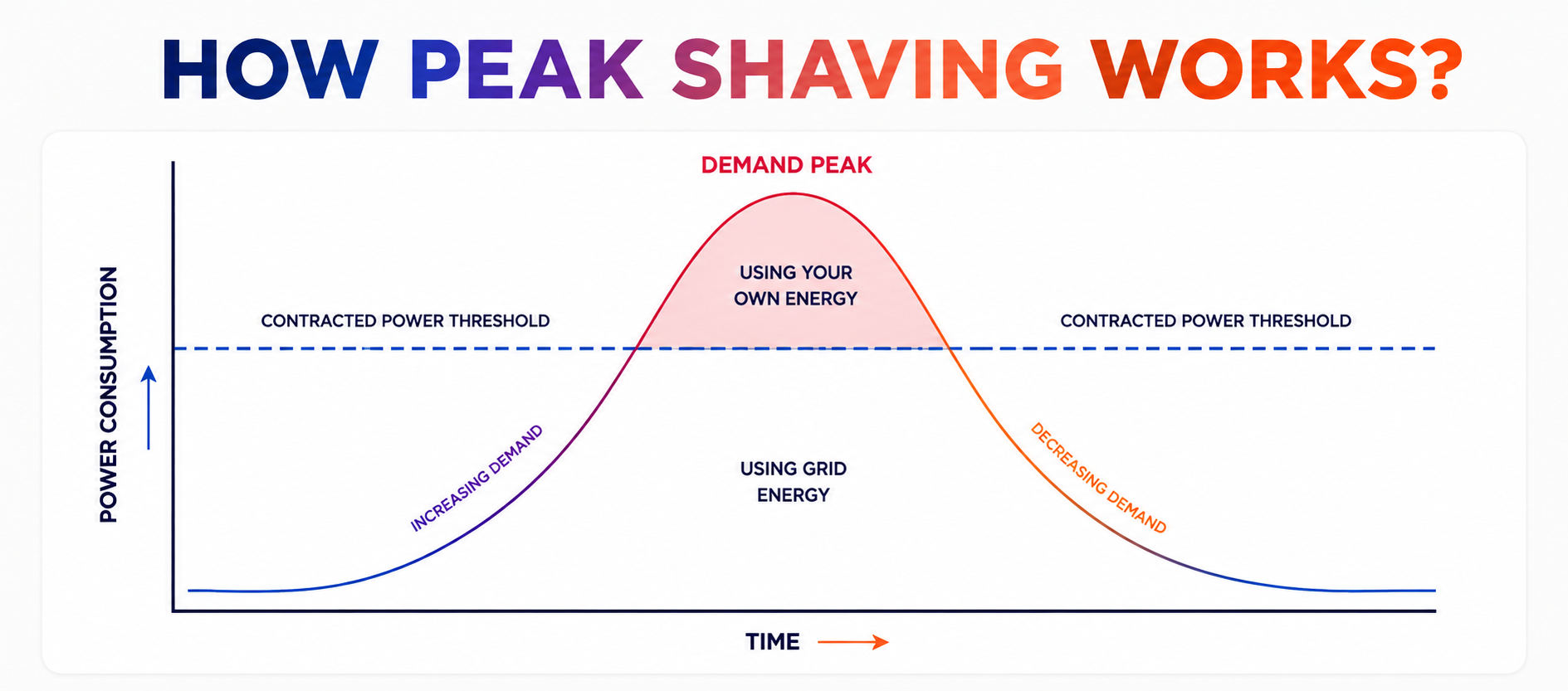
Peak Shaving works on a very simple principle: using an alternative energy source during periods of peak demand to prevent the power drawn from the grid from reaching high levels. In a facility equipped with a BESS system, the batteries are charged when demand is low, there is a surplus of renewable generation, or the price of electricity is more favourable. Subsequently, when consumption rises and approaches the set power limit, the system begins to discharge the batteries to supply part of the energy required.
In this way, the demand recorded by the electricity meter remains within pre-defined limits, thereby avoiding financial penalties and reducing the contracted power required to operate the installation. This entire process is carried out automatically by an Energy Management System (EMS), which continuously monitors variables such as:
- Power required by the installation.
- Renewable energy generation.
- BESS system state of charge (SoC).
- Electricity prices.
- Contracted power.
- Historical consumption figures.
- Demand forecasts.
Based on this information, the system determines when to start discharging the batteries and how much energy to supply in order to keep consumption within the set limits. In large-scale industrial facilities, peak shaving can also be combined with load management strategies, such as temporarily switching off certain non-critical equipment or shifting production processes to times when electricity demand is lower.
Why is peak shaving important?
The growth in electricity consumption and the electrification of numerous sectors have highlighted the importance of managing peak demand effectively. In many countries, a significant proportion of the electricity bill is based on the maximum power recorded during certain tariff periods, making peak shaving a tool of great economic value. Reducing consumption peaks helps to lower the costs associated with capacity contracts, improve the utilisation of existing electrical installations and reduce the need to upgrade transformers, power lines or distribution equipment. From the perspective of the electricity system, peak shaving also helps to improve grid stability.
By reducing demand during peak consumption hours, the need to bring backup power stations – which are usually fossil-fuel-based – online is reduced, thereby promoting greater integration of renewable energy. In installations with on-site photovoltaic self-consumption, this strategy enables a higher level of self-consumption by utilising energy previously stored in batteries at times when solar generation is no longer sufficient to meet demand. In addition to financial savings, peak shaving improves businesses’ operational efficiency, increases energy resilience and reduces the environmental impact associated with electricity consumption from conventional sources.
Main applications of peak shaving
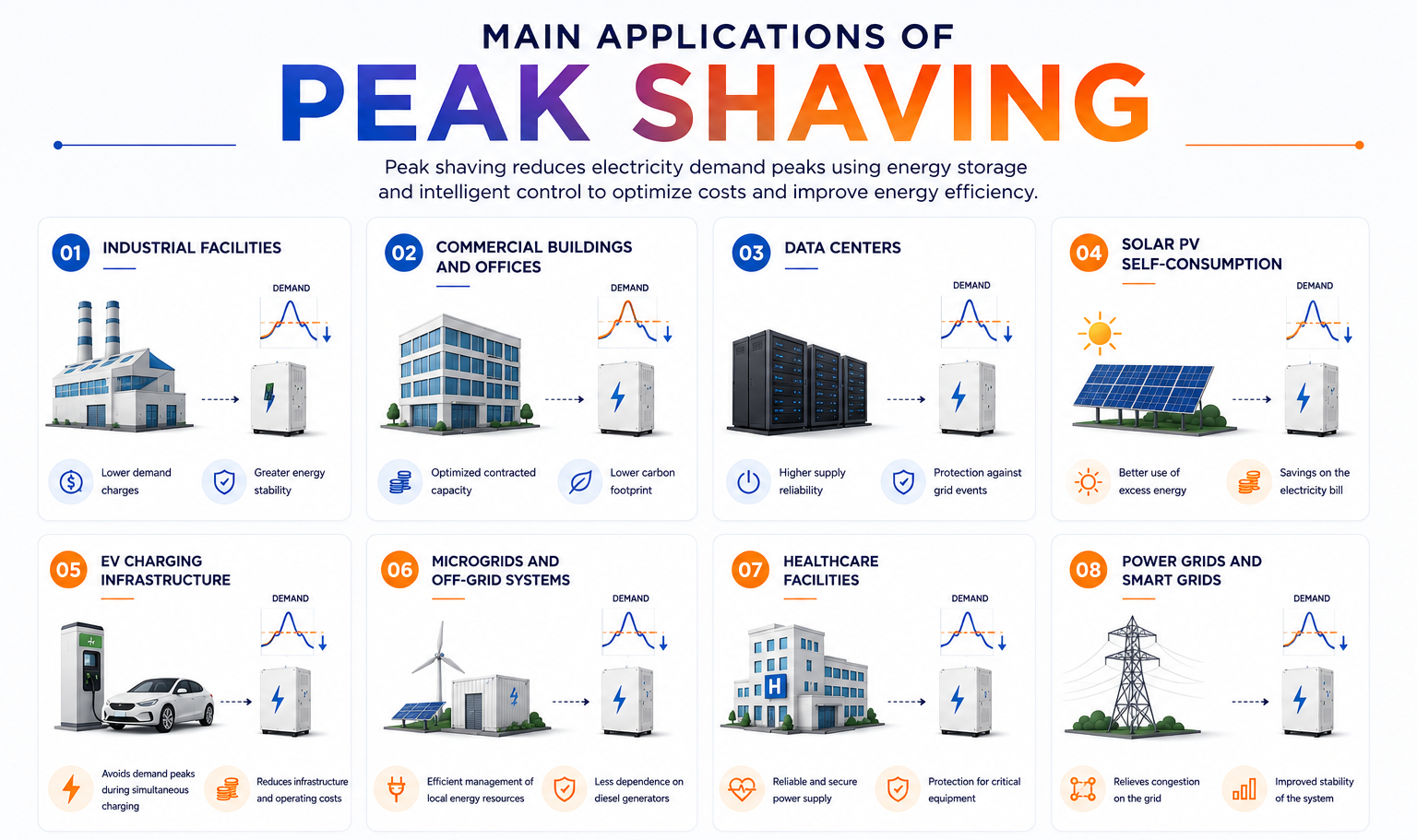
Peak shaving is used across a wide range of sectors where electricity demand fluctuates significantly throughout the day. The combination of storage systems, renewable energy sources and energy management platforms has considerably expanded its potential applications. The main areas where this strategy is used include:
- Industrial facilities: It reduces demand peaks caused by high-power machinery, electric furnaces, production lines or energy-intensive manufacturing processes.
- Commercial buildings: Shopping centres, offices, hotels and hospitals use peak shaving to reduce the costs associated with air conditioning, lighting and other simultaneous energy consumption during peak hours.
- Data Centers: Storage systems help to stabilise electricity demand and optimise the use of critical infrastructure with high requirements for continuity of supply.
- Photovoltaic plants with BESS: The combination of solar power and energy storage makes it easier to utilise renewable energy to reduce the amount of power drawn from the grid during peak consumption hours.
- Charging infrastructure for electric vehicles: Fast-charging stations use peak-shaving strategies to limit the power drawn from the grid when several vehicles are charging simultaneously.
- Microgrids and off-grid systems: Peak Shaving improves the management of distributed energy resources, optimising battery performance and reducing the use of diesel generators.
- Smart Grids: Grid operators use this strategy to reduce congestion, improve system stability and manage electricity demand more efficiently in areas with a high level of renewable energy penetration.